
Information for patients with severe hearing loss or deafness
Dear patients,
a warm welcome to the patient section of the Else Kröner Fresenius Center for Optogenetic Therapies.
According to the World Health Organization (WHO), 466 million people worldwide suffer from hearing loss that requires treatment, including around 16 million people with hearing impairment and 80,000 deaf people in Germany. Anyone who hears little or is deaf from birth learns to speak only with difficulty, if at all. To date, inner-ear hearing disorders can be partially corrected with electrical cochlear implants (eCI). These enable those affected to understand speech in a quiet environment, but the hearing impression is still far from natural hearing. For complex hearing perception that makes it possible to understand speech in background noise, interpret the emotional tone of speech, or enjoy melodies in music, further development of hearing with a cochlear implant (CI) is required. On the following pages you will find more information about how it works and its current stage of development.
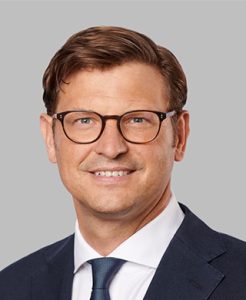
Prof. Dr. med. D. Beutner
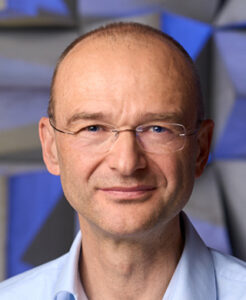
Prof. Dr. med. T. Moser
The Goal
From electrical to optical cochlear implant through optogenetics
The optical cochlear implant (oCI) currently under development uses optogenetics to restore hearing by introducing light-gated ion channels into the auditory nerve via local gene therapy to enable direct neuronal stimulation by light. Stimulation with light can be spatially much better confined than the stimulation of cells with electrical current, as used in the electrical CIs currently in use.
The Miracle of Hearing
– a documentary by Ralph Loop
How does our hearing work? What happens when it loses its function? And how far has research come on the path to one day restoring lost hearing?
“The Miracle of Hearing” accompanies scientists in their search for answers and shows how fascinating and complex our auditory system is. Among other locations, the documentary leads to Göttingen to Prof. Tobias Moser and his team, who are researching new approaches to the restoration of hearing. A special focus is placed on optogenetics – a research approach in which light is used to specifically stimulate signals in the inner ear.
We invite you to take your time and get to know the research behind current developments. The video lasts about 53 minutes.
Hearing with light
Cochlear implants enable most users to understand speech in a quiet environment. However, they suffer from limited sound coding quality: due to the wide spatial spread of the electrical current from each electrode contact, too many auditory nerve cells in the vicinity of the contact are stimulated simultaneously (Fig.). As a result, the number of independent stimulation channels is low (typically under 10), and the ability to distinguish pitch and loudness when hearing with cochlear implants is limited. This severely restricts the ability to understand speech in background noise, follow musical melodies, or interpret the emotional tone in speech. Because light can be focused more precisely in space, this fundamental problem could be overcome by using light instead of electrical current to stimulate the neurons. Each light source would then excite a much smaller group of cells compared to “electrical hearing” (Fig. 1). In this way, future optical cochlear implants could transmit sound information via 64 stimulation channels using microscale light sources. This promises a significant improvement in distinguishing pitch and loudness, and thus a breakthrough in restoring hearing for people with severe hearing loss.

Figure: Schematic representation of how cochlear implants work (Kleinlogel et al., Physiol Rev. 2020, modified)
Left: Current electrical cochlear implant with large lateral spread of electrical stimulation from each of the 12 electrode contacts. Right: Future optical implant with numerous emitters whose light is focused on the auditory nerve.
Where we currently stand
EKFZ OT is working on preclinical oCIs for the fundamental characterization of optical hearing and on developing the human prototype for clinical testing. For the clinical oCI, some components of the electrical implant can be used, but other components such as the waveguide-based optical stimulator and the sound coding strategy must be newly developed and approved under the strict testing rules for active implantable medical devices. Patient safety and long-term stability, which must be ensured even under the most adverse conditions, are top priorities.

More
Information
Since the founding of EKFZ OT, the focus has been on the development of new therapeutic approaches for deafness, blindness, gastroparesis and motor deficits. The aim is to develop optogenetic restoration of hearing with optical cochlea implants, optogenetic restoration of vision with light-amplifying glasses, optical gastric pacemakers and brain-computer interfaces for the future treatment of patients. Scientific excellence and international recognition are reflected in the leading researchers of EKFZ OT, who are leaders in their respective fields. In doing so, they make use of local research networks such as the Cluster of Excellence (MBExC), the Collaborative Research Center 1690, as well as cooperation with external partners.

Department of Otorhinolaryngology at University Medical Center Göttingen

Institute for Auditory Neuroscience (IAN)

Collaborative Research Center 1690
Audiovisual art project brings “hearing with light” to life
In addition, we would like to draw your attention to our audiovisual art project “KLANGLICHT – Sound of Light”. What does it sound like when someone hears again for the first time after years of severe hearing loss or deafness? What does it feel like when new technologies make the world of sound clearer and more differentiated than before? The audiovisual music project, an animated video in the style of a music video, is dedicated to these questions. The aim is to bring current Göttingen research on the restoration of “hearing with light” closer to listeners in a tangible form. You are only one “click” away.
Questions?
We are here for you.
University Medical Center Göttingen
Department of Otolaryngology
Audiology Center
Email: audiol.zentrum@med.uni-goettingen.de