

2026
Göttingen Researchers on the Nobel Prize in Medicine and the Optogenetics Hub Göttingen
Prof. Dr. Tobias Moser speaks with the HNA about the 2026 Nobel Prize in Medicine, the award process, and the opportunities for optogenetics application research in Göttingen at the globally unique Else Kröner Fresenius Center for Optogenetic Therapies.
Nobel Prize in Medicine: Discoveries in Genetics
Lars Klingbeil visits Universitätsmedizin Göttingen
The Federal Minister of Finance and Vice Chancellor is being briefed on construction projects, IT infrastructure, and technology transfer at UMG.
Eight years of top-level research for heart and brain – MBExC continues to have an impact
With the international symposium “Bioimaging across scales,” the Göttingen Cluster of Excellence “Multiscale Bioimaging” (MBExC) concluded eight years of interdisciplinary top-level research: innovative imaging techniques were developed, molecular structures were uncovered, and new insights into the function of the heart and brain were gained. The MBExC funding is set to expire at the end of 2027, but the established structures and research will be continued. The event took place on September 28 and 29, 2026, in the Alte Mensa at Wilhelmsplatz in Göttingen.
Activity Day for All Ages: Consciously Experiencing and Exploring the Senses
Hearing, sight, smell, taste, and touch are five important senses we use to perceive our environment every day. We experience the chirping of birds, the taste of our favorite ice cream, or the beauty of a rainbow through our senses. At the same time, they also warn us of dangers, such as smoke from a fire, the signal tone of an alarm system, or the smell and taste of something inedible.
Dr. Anne Petzold awarded the Du Bois-Reymond Prize by the German Physiological Society
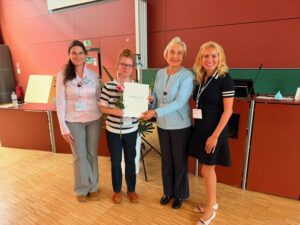
Dr. Anne Petzold, Emmy Noether Group Leader at the European Neuroscience Institute Göttingen and Associate Investigator at the EKFZ OT, has been awarded the Du Bois-Reymond Prize by the German Physiological Society for her pioneering research on how internal physiological states shape neural circuits and behavior.
The German Physiological Society awards the Du Bois-Reymond Prize annually to an outstanding young scientist. Funded by the Erwin Riesch Foundation in Tübingen, the prize recognizes outstanding and original scientific contributions to a current field of physiology.
New Building for Auditory Research: UMG Consolidates Expertise Under One Roof

The University Medical Center Göttingen (UMG) is constructing a new research building for the Institute for Auditory Neurosciences (IAN). By the end of 2028, over 1,800 square meters will house laboratories, offices, and spaces for scientific exchange. In the new building, together with the working groups of the Else Kröner Fresenius Center for Optogenetic Therapies (EKFZ-OT), work will focus on developing new approaches for the restoration of hearing – from gene therapeutic procedures to optogenetic cochlear implants. The state of Lower Saxony has allocated approximately 35.5 million Euros for the construction.
NEW CONSTRUCTION ON ROBERT-KOCH-STRASSE …

Construction is underway at the UMG – not only on the construction site of NIKO, our new building for state-of-the-art medical care in southern Lower Saxony, but also on Robert-Koch-Strasse. A new research building is being built there for the Institute for Auditory Neuroscience (IAN) and research groups of the Else Kröner Fresenius Center for Optogenetic Therapies (EKFZ-OT).
Lower Saxony invests €627 million in university construction and research infrastructure
Lower Saxony is launching a major investment programme for its universities. In addition to the regular funds for construction and refurbishment, the state is providing around €627 million for construction, modernisation and equipment measures.
The funds come from the federal government’s special fund for infrastructure and climate neutrality (SVIK). This is intended to ensure that necessary modernisation at the universities is implemented quickly and that the infrastructure is developed sustainably. The State of Lower Saxony is giving a high priority to science in this context. The investments are intended to strengthen the framework conditions for research, teaching and innovation in the long term. (Source: Lower Saxony Ministry of Science and Culture)
Participants wanted for online survey
Inner ear gene therapy – your opinion matters!
The Else Kröner Fresenius Center for Optogenetic Therapies (EKFZ OT), together with the Institute for Auditory Neuroscience and the Department of Otorhinolaryngology at University Medical Center Göttingen, is conducting a scientific online survey on inner ear gene therapy. The survey was initiated by Dr. Tobias Dombrowski, Prof. Dr. Tobias Moser and Prof. Dr. Dirk Beutner, Director of the Department of Otorhinolaryngology.
The aim of the survey is to find out under what conditions patients would be willing to take part in a future gene therapy study – especially if the treatment initially offers no immediate personal benefit, but primarily serves to advance scientific knowledge.
The survey is being conducted in cooperation with the journal “Die Schnecke” of the German Cochlear Implant Society and can be accessed via the following link:
Introduction of a Quality Management System for Combination Products
“Imagine you are founding a university spin-off with the goal of bringing a medical device or gene therapy to market. When should a Quality Management System (QMS) be implemented?”
IdeenExpo Hannover: When Hearing Suddenly Works with Light
What do you do when curious teenagers want to know how you can hear with light? You pack up your cochlear implant model and head to the IdeenExpo in Hannover!
EKFZ OT General Assembly Elects New and Additional Spokespersons
The general assembly of EKFZ OT elected additional spokespersons on June 4, 2026, …
Else Kröner Professorship for Disease Modeling
New professorship accelerates the development of optogenetic therapies Integrated approach improves preclinical assessment of safety and efficacy
Keys. Hearing. Touch. – Between Sound and Silence – Benefit Concert for the German Cochlear Implant Society e.V.
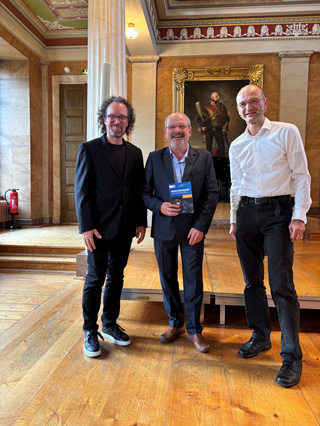
On Monday, June 1, 2026, at 7:30 PM, the Rotary Club Göttingen hosted a benefit concert in the auditorium of the Georg-August University Göttingen, combining musical masterpieces with a scientific perspective on hearing.
Göttingen cultural figures and Rotarians from our club, including pianist Julia Bartha, choirmaster Bernd Eberhardt, the University Music Göttingen with Antonius Adamske, and guest violinist Nina Karmon, will perform choral and chamber music works by J. S. Bach, L. v. Beethoven, J. Brahms, and C. Debussy.
Neuroscientist and fellow club member Tobias Moser will also offer fascinating insights into the interplay of music and perception in his lecture on hearing.
DT actor Florian Eppinger will read from Ludwig van Beethoven’s Heiligenstadt Testament, thereby building an impressive bridge between research and music.
EKFZ for Optogenetic Therapies: First of four Else Kröner Professorships launched
Dr. Christian van Oterendorp took up the Else Kröner Professorship for Translational Ophthalmology at the Department of Ophthalmology, University Medical Center Göttingen, on May 1.
Amazing new insights into the pathology of Usher syndrome
For approximately 25 years, Prof. Uwe Wolfrum from the Institute at Johannes Gutenberg University Mainz has been researching Usher syndrome. In collaboration with Prof. Reinhard Lührmann from the Max Planck Institute for Biophysical Chemistry in Göttingen, he discovered a new pathomechanism that leads to this disease. The scientists found that the Usher syndrome 1G protein SANS plays a crucial role in regulating the splicing process.
First of four Else Kröner Professorships begins at Else Kröner Fresenius Center for Optogenetic Therapies
Professorship for translational ophthalmology established at University Medical Center Göttingen to accelerate the clinical development of optogenetic treatments.
EKFZ Academy meets Industry!
Last week, members of the EKFZ Academy had the great pleasure of visiting Sartorius and getting to know their cutting-edge technologies.
Focus on Gene and Cell Therapies: International Experts Highlight Opportunities and Challenges.
Whether it’s about new treatment options for cancer, rare diseases, or age-related conditions—leading researchers and experts from clinics and industry are gathering in Frankfurt am Main to share their knowledge about modern gene and cell therapies.
Dr. Kathrin Kusch represented the Else Kröner Fresenius Center for Optogenetic Therapies with a presentation on “Hearing the Light.” Hannover Medical School, which is also a partner of the EKFZ, was represented by Prof. Hildegard Büning.
Audiovisual art video at the ENT Congress in Ulm
This year’s annual meeting of the German Society of Oto-Rhino-Laryngology, Head and Neck Surgery was held in Ulm under the congress motto “Fascination Head and Neck Surgery.”
Developing technology and saving lives – a look into Fenja’s everyday student life and what fascinates her
The new 04/05 2026 issue of think ING. kompakt focuses on the exciting topic of medical technology. It features Fenja Hanneken, a student at the University of Applied Sciences and Arts (HAWK) and a student assistant at the Else Kröner Fresenius Center for Optogenetic Therapies (EKFZ OT) at University Medical Center Göttingen.
Else Kröner Professorship for Disease Modeling
Dr. Maria-Patapia Zafeiriou will take up the Else Kröner Professorship in Disease Modeling at the Department of Pediatrics and Adolescent Medicine, Division of Neuropediatrics, University Medical Center Göttingen, on June 1, 2026.
How can medical device approval be achieved in a complex regulatory environment?
This central question was addressed as part of the EKFZ Academy workshop “Medical Devices – Quality and Regulatory Overview”, led by Dr. Sabine Hauck.
Else Kröner Professorship for Translational Ophthalmology
Dr. Christian van Oterendorp will assume the Else Kröner Professorship for Translational Ophthalmology on May 1, 2026, at the Department of Ophthalmology, University Medical Center Göttingen.
Science Festival 2026 at the new Community Center
January 28–29, 2026 at the Community Center of the XLAB Foundation, Göttingen
This year’s Science Festival took place at the new XLAB Foundation community center. To mark the opening of the center, outstanding scientists were invited to share insights into their research—ranging from contemporary European history and super-resolution microscopy to hearing research, astrophysics, and RNA viruses. Speakers also included Prof. Tobias Moser, Director of the Institute for Auditory Neuroscience. He showed how astonishingly precise hearing is organized physically and biologically, and where it typically “breaks down.” Hair cells convert the tiniest mechanical vibrations into electrical signals, and the downstream synapses act as high-performance transmitters with extremely precise timing. This mechanism also reveals targets for therapies, ranging from molecular repair and gene therapy to improved cochlear implants. A particularly forward-looking approach is the “optical cochlear implant” with optogenetic stimulation, which promises more precise activation of the auditory nerve than traditional electrical stimulation.
“Science goes City”
On April 19, 2026, science came directly to interested visitors. Under the motto “Science goes City”, Göttingen’s city center turned into a huge hands-on experience zone for joining in, trying things out, and marveling.
From 12 to 6 PM, over 60 activities, diverse experiments, and fascinating insights into current research were presented. Whether strolling through the pedestrian zone or visiting your favorite shops: exciting stations are waiting to be discovered everywhere.
Auditory Neuroscience and Optogenetics Stem Cell and Regenerative Biology
Genetically Modified Common Marmosets as a Model for Human Deafness
Why are some people unable to hear from birth—even though their inner ear appears to be intact? One possible cause lies in the so-called OTOF gene. It plays a central role in transmitting sound signals from the hair cells to the auditory nerve. If this function is missing, acoustic information does not reach the brain. Researchers from the German Primate Center – Leibniz Institute for Primate Research, together with University Medical Center Göttingen and the Max Planck Institute for Multidisciplinary Sciences, have now generated common marmosets in which this gene was specifically knocked out for the first time. The animals are healthy and develop normally, but are deaf from birth. This provides the first primate model that realistically represents key forms of human deafness (Nature Communications).
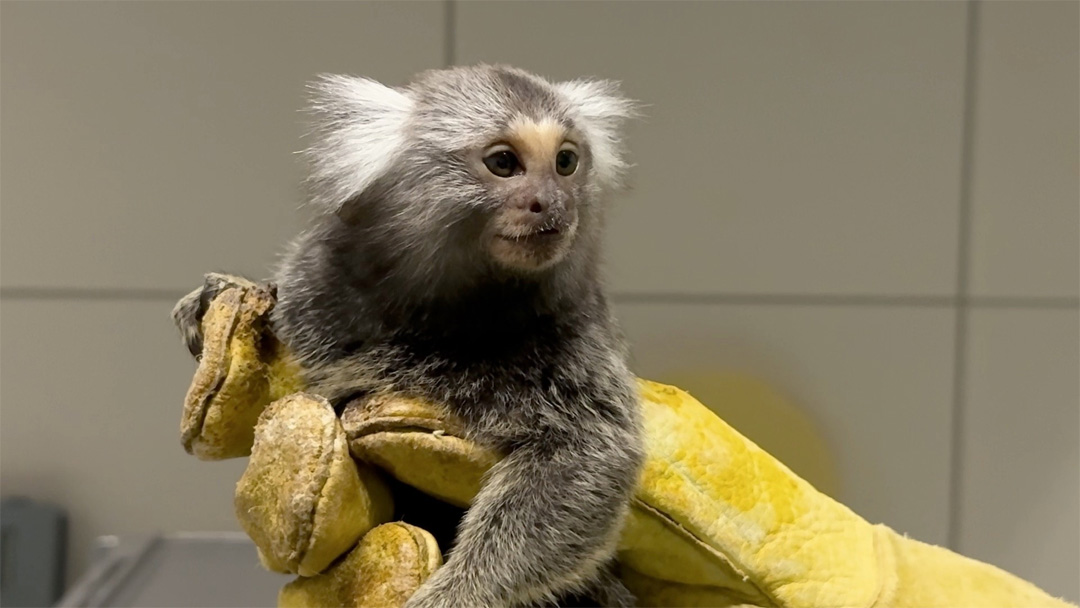
Copyright: DPZ/Katharina Diederich
Patient Action Day at UMG on age-related macular degeneration
Text becomes distorted and crooked, letters disappear, faces are no longer recognized, and even the best glasses no longer help. According to the Professional Association of Ophthalmologists in Germany (BVA), age-related macular degeneration (AMD) affects more than seven million people in Germany and, at 50%, is the most common cause of severe visual impairment, which can also lead to blindness.
1st Patient Action Day on age-related macular degeneration (AMD)
Saturday, April 18, 2026, 10:00 AM to 3:00 PM
Lecture Hall 552 and East Hall, University Medical Center Göttingen, Robert-Koch-Straße 40, 37075 Göttingen
How new therapies save our hearing
Around 16 million people in Germany no longer hear well—and the trend is rising. The good news: hearing technology is becoming ever more sophisticated. A new implant uses light signals to achieve what was previously impossible.
Neurotech in Germany: How to combine innovation and responsibility?
Thomas Stieglitz is contributing to the VDI Initiative “Zukunft Deutschland 2050” in the field of Neurotech and AI as part of “Zukunft Medizintechnik 2050” and shares his thoughts on this topic jointly with others in this campaign.
German Society for Biomedical Engineering (DGBMT) TECH TALK series: Neurotechnologies for the future of medicine
The DGBMT TECH TALK series “Applications of neurotechnology: From nerve monitoring to nerve stimulation” provides a concise overview of clinical applications, technical solutions, and current innovation dynamics in neurotechnology and neuroprosthetics.
Applications of neurotechnology from a clinical perspective: From nerve monitoring to nerve stimulation
The focus is on benefits for patients and guideline-based therapy that is intended to replace existing approaches. All information should be supported by case numbers. The topic area is introduced and placed in the context of the regulatory and economic framework conditions in Germany.
Speakers
Prof. Dr. med. Steffen Rosahl, Neurosurgery, Helios Klinikum Erfurt
Prof. Dr.-Ing. Thomas Stieglitz, IMTEK, University of Freiburg
Scientific Advice by PEI and CHMP
What is scientific advice, how is it done and what is expected from the applicant?
These relevant questions were addressed during last week’s EKFZ Academy workshop. Dr. Jens Reinhardt, a regulatory scientist at Paul-Ehrlich-Institut (PEI) and member of the Scientific Advice Working Party of the European Medicines Agency (EMA), presented the advice possibilities given by the upper regulatory agencies in Germany and the Scientific Advice Working Party at EMA.
From Good Manufacturing Practice (GMP) to Good Clinical Practice (GCP)
In November and December, the EKFZ Academy hosted two workshops dealing with the regulations and guidelines for the safe, effective, and high-quality manufacture and testing of medicinal products.
Dr. Sabine Hauck addressed the GMP standards for the manufacture of Advanced Therapy Medicinal Products (ATMPs) and guided the audience through the requirements for GMP documentation. Based on her broad expertise in the life science industry, she also provided valuable insights into the interaction with contract manufacturers and highlighted the interface to GCP.
Young scientist researches restoration of vision
Dr. Patrick Jendritza from the Salk Institute for Biological Studies, USA, has been awarded a “Junior Fellow Position” at the Else Kröner Fresenius Center for Optogenetic Therapies (EKFZ-OT) at the University Medical Center Göttingen (UMG). Since January 1, 2026, the young scientist has been heading the “Visual Circuits” research group, which focuses on the development of light-controlled brain-computer interfaces for restoring vision. The research group, based at the German Primate Center – Leibniz Institute for Primate Research (DPZ), is being funded by the Else Kröner-Fresenius Foundation and the Lower Saxony Ministry of Science and Culture with a total of around 480,000 euros for an initial period of three years and three months.