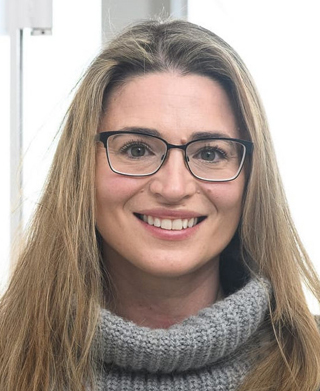
Prof. Dr. Maria-Patapia Zafeiriou
Copyright: UMG


Else Kröner Professorship for Disease Modeling
New professorship accelerates the development of optogenetic therapies Integrated approach improves preclinical assessment of safety and efficacy
Dr. Maria-Patapia Zafeiriou will take up the Else Kröner Professorship for Disease Modeling on June 1, 2026, at the Department of Pediatrics and Adolescent Medicine, Division of Neuropediatrics, University Medical Center Göttingen.
The professorship, newly established by the Else Kröner Fresenius Foundation as part of its support for the Else Kröner Fresenius Center for Optogenetic Therapies (EKFT OT), is one of four in total and aims to provide an innovative, integrated framework for experimental and computational disease modeling.
A key component of the professorship’s research is neuronal and inner-ear organoids derived from human induced pluripotent stem cells (iPS cells). These serve as translational preclinical models for disease modeling as well as for screening and validating efficient, cell-type-specific strategies for gene delivery and optogenetic therapies. Continuous bidirectional data exchange between the computational, organoid-based, and animal-experimental approaches ensures iterative refinement of the therapies being developed. This close integration of methods significantly improves the predictive power of preclinical studies while also helping to reduce and refine animal experiments in line with modern research standards.
Short bio
Dr. Maria-Patapia Zafeiriou is a group leader at the Institute of Pharmacology and Toxicology at University Medical Center Göttingen. She earned her PhD at the National and Kapodistrian University of Athens and completed postdoctoral training at the Max Delbrück Center for Molecular Medicine in Berlin. Dr. Zafeiriou’s research group investigates three-dimensional networks of electrically excitable cells of the brain and heart generated from human induced pluripotent stem cells (iPS cells). With a particular focus on neuronal network function, neurocardiac communication, and pediatric diseases, the group aims to use New Approach Methodologies (NAMs) to elucidate disease mechanisms and advance the development of new therapies.