

Else Kröner Professorships

Else Kröner Professorship for “Opsin Engineering”
Dr. Johannes Vierock from Charité – Universitätsmedizin Berlin will take up the Else Kröner Professorship for Opsin Engineering at the Institute of Auditory Neuroscience at University Medical Center Göttingen on 2026-08-01.
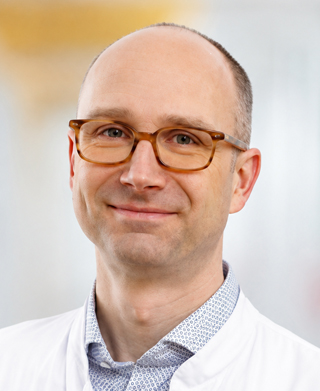
Else Kröner Professorship for “Translational Ophthalmology”
PD Dr. med. Christian van Oterendorp will take up the Else Kröner Professorship for Translational Ophthalmology at the Department of Ophthalmology at University Medical Center Göttingen on May 1, 2026.
The goal: restoring vision through optogenetics
The most common cause of blindness in young and middle-aged adults is retinitis pigmentosa. In this condition, the light-sensitive photoreceptors in the retina gradually degenerate, leading to progressive vision loss and ultimately complete blindness. The research team led by Prof. Dr. med. Christian van Oterendorp, Prof. Dr. Emilie Macé, and Prof. Dr. Tim Gollisch aims to restore part of vision in these blind individuals, drawing on the combined expertise at the Göttingen Else Kröner Fresenius Center for Optogenetic Therapies. To achieve this, the retinal nerve cells that remain in this disease are made light-sensitive through optogenetic treatment, allowing them to partially take over the function of the lost photoreceptors.
In parallel, clinical studies are currently being conducted at the Department of Ophthalmology under the leadership of Prof. Dr. med. Christian van Oterendorp to better understand the degeneration processes in the diseased retina and to apply this novel treatment approach as precisely and effectively as possible. Another focus is the development of rehabilitation strategies so that treated patients can make the best possible use of their regained retinal light sensitivity in everyday life.
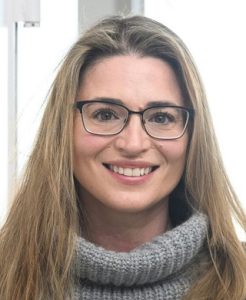
Else Kröner Professorship in “Disease Modeling”
Dr. Maria-Patapia Zafeiriou will take up the Else Kröner Professorship in Disease Modeling at the Department of Pediatrics and Adolescent Medicine, Division of Neuropediatrics, University Medical Center Göttingen, on June 1, 2026.
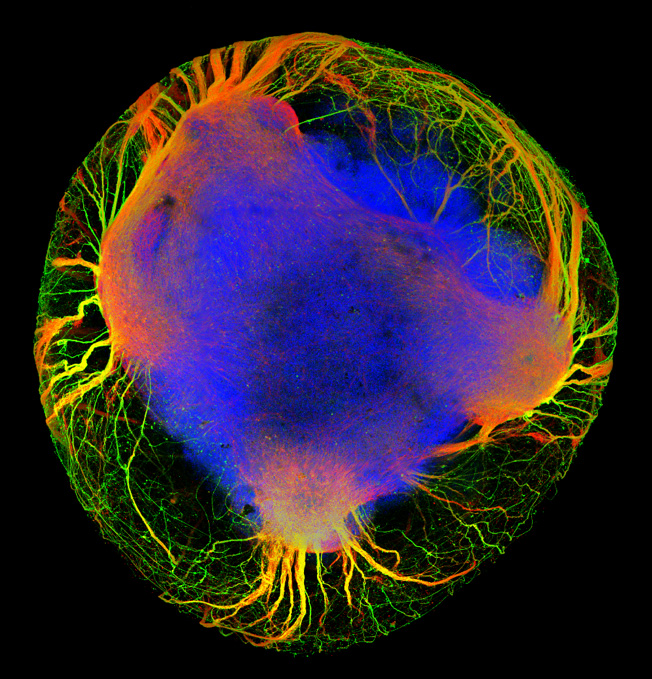
A core component of the professorship’s research is neuronal and inner-ear organoids derived from human induced pluripotent stem cells (iPS cells). These serve as translational preclinical models for disease modeling as well as for screening and validating efficient, cell-type-specific strategies for gene transfer and optogenetic therapies. Continuous bidirectional data exchange between the computational, organoid-based, and animal-experimental approaches ensures iterative refinement of the therapies developed. This close integration of methods significantly improves the predictive power of preclinical studies while also helping to reduce and better target animal experiments in line with modern research standards.
Else Kröner Professorship “Translational Otology”
Appeals proceedings are currently underway.